

When people think about interior design for a living room, they often start with furniture, colours or inspiration images. Sofas are chosen, paint samples ordered, and only later does it become clear that something still doesn’t feel quite right.
This practical guide to interior design for living room spaces focuses on what actually makes a room work: layout, flow, lighting and material choices that support the way you live day to day, not just how the room looks.
Why Interior Design for Living Room Spaces Can Often Miss the Mark
Many living rooms are furnished rather than properly designed. Decisions are made in isolation, without considering how the space will be used across different moments of the day.
As a result, rooms can feel awkward to move through, uncomfortable to sit in, or difficult to adapt from daytime use to evening relaxation. The design might look fine, but it doesn’t support real life.
Good interior design for living room spaces starts earlier and looks deeper. It considers lifestyle first, then builds the design around it.
Start With How You Use Your Living Room
Before thinking about finishes or furniture, it’s important to understand how the room needs to function.
Consider:
- How do you primarily use the living room: relaxing, entertaining, watching television, reading or working?
- How many people use the room at the same time?
- Does the space need to work differently during the day and in the evening?
These answers shape every design decision that follows. A living room designed around how you actually live will always feel more comfortable and intuitive.

A good example of this came from a project in Brentwood. The clients had a cold, dark front room with a fireplace and chimney breast they never used, separated from a bright, well-used dining conservatory by a dividing wall. Their initial instinct was to knock the wall down and open the space up.
Once we talked through how they actually lived, particularly how they used their home in the evenings, it became clear that one large open room wouldn’t serve them as well as two distinct spaces. She liked to relax with the television, while he preferred a quiet place to read. Keeping separate rooms allowed both to happen comfortably, at the same time.
Instead of opening the space, we reworked the existing room. The chimney breast was removed, the layout was turned around so the sofa could sit along the full length of the wall, and a new media wall was introduced where the old seating had been. We embraced the darker aspect of the room with a rich rust tone, layered lighting and a new media wall fireplace, instantly adding warmth and making it a space designed for evenings.
The result was a living room that finally worked for them. The atmosphere changed completely, the room became an inviting destination rather than a space to avoid, and both clients got exactly what they needed from their home without compromise.
Living Room Layout: Getting the Flow Right
Layout is one of the most important elements of interior design for living room spaces, yet it’s often overlooked.
A well-planned living room layout should:
- Allow clear circulation through the space
- Define seating areas without blocking movement
- Feel balanced rather than pushed to the edges
- Create a natural focal point
Grouping furniture to form conversation areas often works better than lining pieces up against walls. If you have the space bring the sofas more into the room so your walkway is behind them. When the flow is right, the room immediately feels calmer and more considered.
Choosing Materials That Shape the Mood
Materials play a major role in how a living room feels. Natural materials in particular help create warmth, texture and depth.
Timber, wool, linen, leather and stone all bring a grounded quality to a space. Layered thoughtfully, they soften the room and prevent it from feeling flat or overly styled.
Successful interior design for living room spaces uses materials to create atmosphere, not just visual interest. Texture helps the room feel inviting and comfortable at all times of day. Read more about this on our Biophilic Design page, which is a huge part of how we achieve the interiors that we create.
Living Room Lighting: Designing for Day and Night
Lighting is often treated as an afterthought, yet it has a huge impact on how a living room functions.
A practical lighting scheme usually includes:
- Ambient lighting for general use
- Task lighting for reading or specific activities
- Accent lighting to highlight features, artwork or texture
Table lamps, floor lamps and wall lights help soften the space in the evening, while dimmable options allow the room to transition easily from day to night. Thoughtful lighting design supports mood, comfort and wellbeing. See the blog Lighting Design 101 for more ideas about this hugely important element.
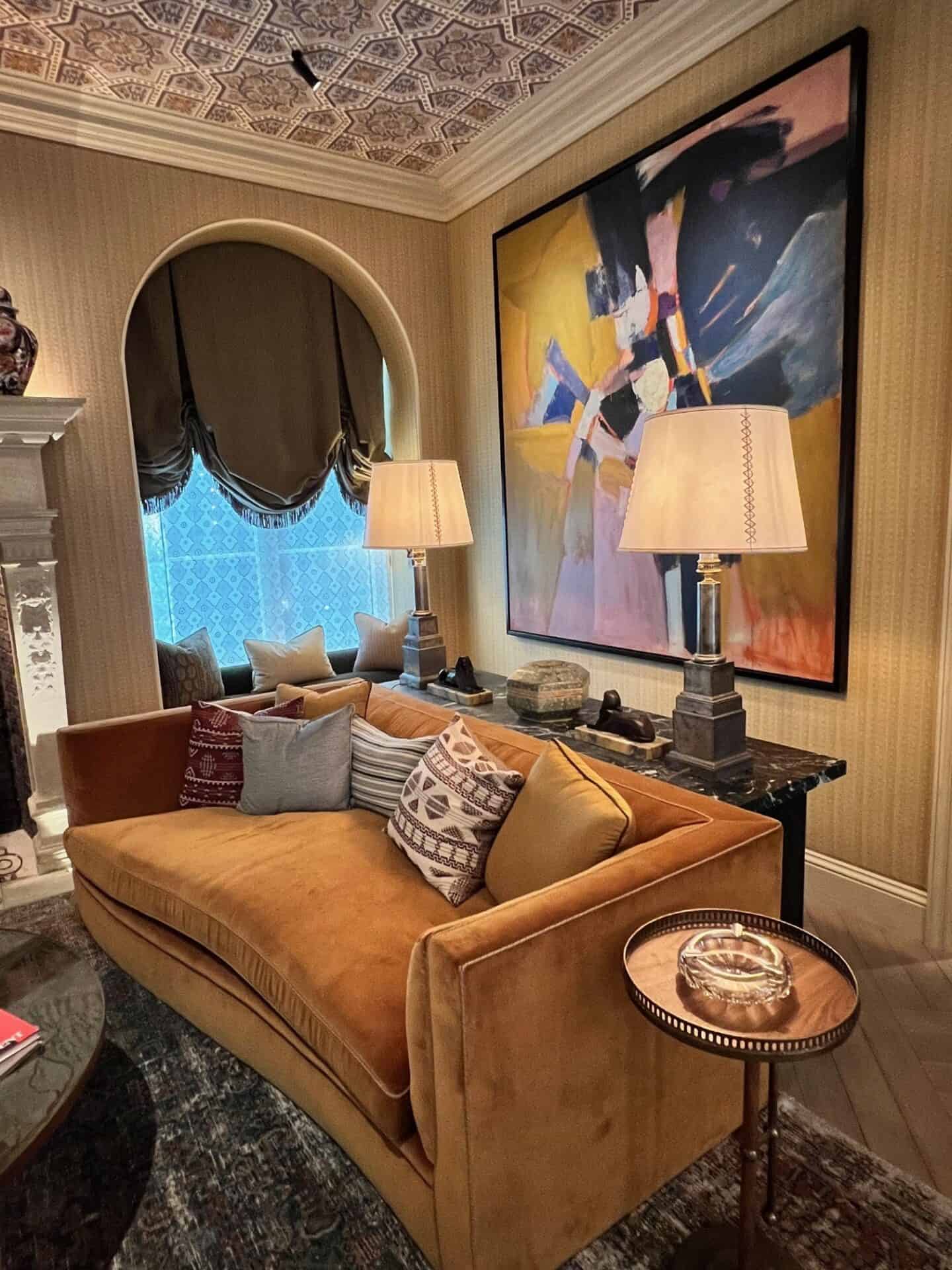
Styling a Living Room Without Overcrowding It
Styling should enhance the space, not overwhelm it.
Fewer, larger pieces tend to work better than lots of small accessories. I remember walking into someone’s living room once and it was overwhelmed by every surface, every inch of wall and every inch or floor space being so full and cluttered. It made want to run and hide! Resist the temptation, you will end up with a space that just feels overwhelming.
Mixing contemporary items with vintage or character pieces adds depth and personality, helping the room feel lived-in rather than staged.
Artwork, plants and decorative objects should feel intentional and connected to the overall design. The aim is a layered, expressive living room that still feels calm and usable.
What a Well-Designed Living Room Gives You
When interior design for living room spaces is done properly, the benefits go beyond appearance.
A well-designed living room:
- Feels comfortable and intuitive to use
- Adapts easily to different activities
- Encourages relaxation and conversation
- Reflects the people who live there
It becomes a space that supports everyday life rather than something that constantly needs adjusting.
If Your Living Room Still Doesn’t Feel Quite Right
If your living room feels slightly off, it’s rarely because you need more furniture or a new colour. More often, it comes down to layout, lighting or material choices that don’t fully support how the space is used.
Revisiting these fundamentals can transform how the room feels without starting again from scratch. Interior design for living room spaces works best when every decision is connected back to the way you live.
For help with the interior design for your living room, start by booking a free 30 minute call, here, so we can have an initial chat and go from there.