
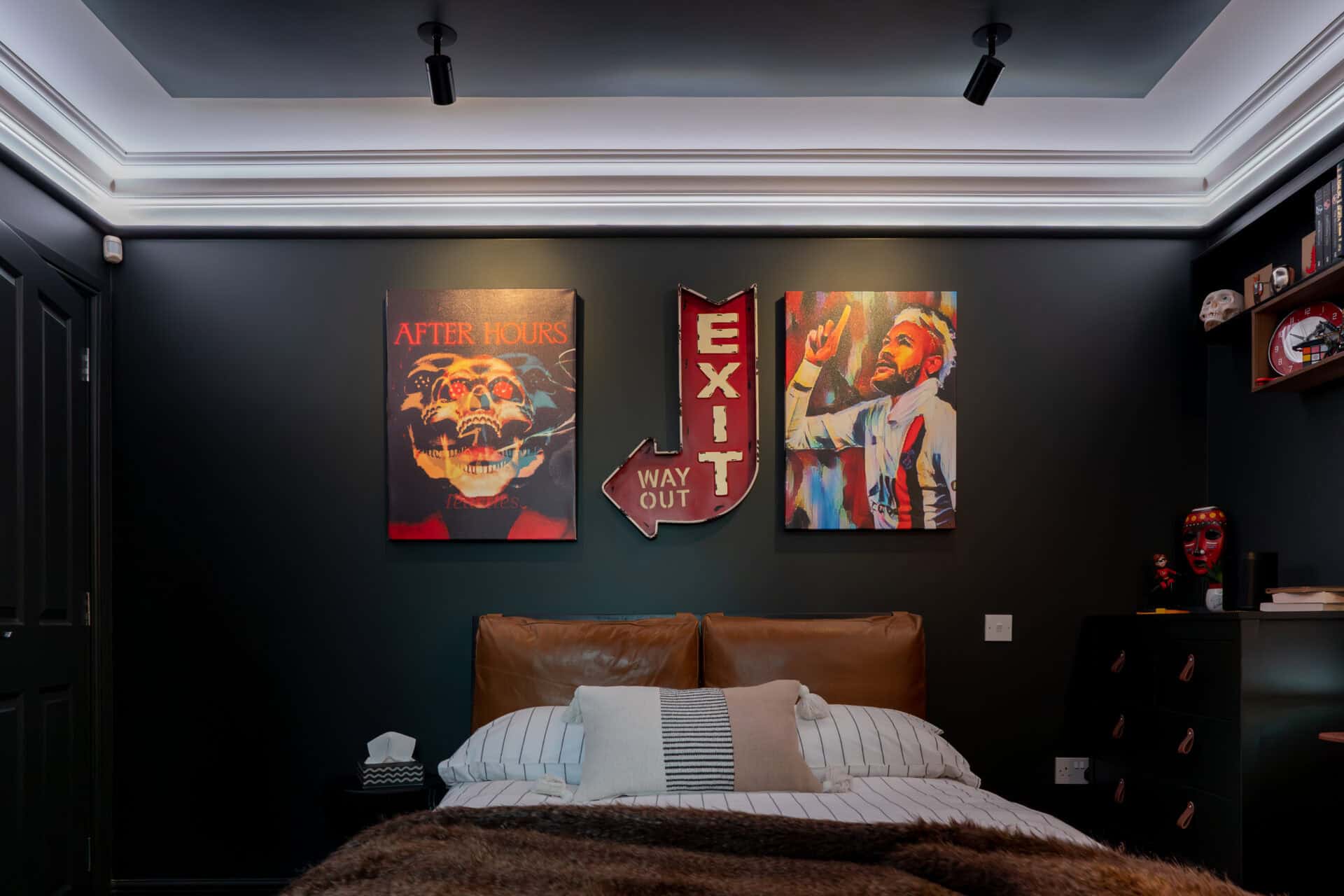
Lighting design is one of the most underrated elements in interior design, and yet it has the power to completely make or break a space. There’s nothing worse than walking into a room where the lighting is so harsh you want to run and hide, or so dim you can’t see what you’re doing. It’s one of those things you only notice when it’s wrong – and by then, it’s usually too late.
Lighting is a vast subject. It merges science, psychology, and aesthetics, and how we each respond to light is deeply individual. While this blog won’t cover every technical nuance, it will give you a practical framework for getting it right – without the guesswork. Good lighting doesn’t just happen – it takes planning, insight, and a designer’s instinct for atmosphere and flow. There is a wealth of possibilities out there that will ramp up the mood you are trying to create in your home, so let’s dive in.
The Very First Step – Even Before Lighting Design
I once received a call from a prospective client who was in the middle of building a new five-bedroom, three-storey home. She was interested in my lighting design package but only as a standalone service, without any involvement in the furnishings or decorative layers. Naturally, once I explained how powerful well-considered lighting can be, she was intrigued. But as we walked through the process, she realised the time and investment it truly required to design her lighting properly.
You see, lighting design isn’t just about choosing fixtures and drawing up a plan. It’s deeply connected to how a space will be lived in. Before I could even begin designing the lighting, I needed to understand how each space would function, what activities it would need to support, and how the furniture would be arranged. Without that context, any lighting layout is little more than guesswork and often leads to missed opportunities. So, nail down your furnishings layout, know how you will use the space and be clear on what you are trying to achieve, before getting stuck into design!
Layered Lighting is the Gold Standard
Most electricians will only light for function. Sound familiar? “Where should I hang my pendants?” “Dunno, love, wherever you want me to hang them!” Electricians are the do-ers, the people with the technical know-how, but if you want a home to be lit with atmosphere, mood and perhaps a touch of drama – then designers are the people to go to for a lighting plan.
Every well-designed room should feel like it has depth and flexibility, which comes from combining ambient lighting (your general ceiling light), task lighting (for focused activities like reading or cooking), and accent lighting (which draws attention to architectural features or art). It’s not about throwing in a pendant and calling it done. It’s about layers, and how those layers interplay throughout the day. Ideally, those layers are independently controlled, allowing you to tailor the atmosphere at any given moment.
Every room benefits from having at least two to three layers of lighting, ideally controlled independently with separate circuits. If you have several lights or types of light on one circuit which leads back to one switch, then obviously they will all come on together. Try to give yourself choice by having different lights on different switches and go for dimmer switches. This allows the mood to adapt throughout the day and into the evening. Designers don’t default to standard on/off switches, we build in control, so light can support both function and feeling.
Indirect Lighting Wherever Possible
And it’s not just the type of light, but where it comes from. One of the most common mistakes in residential projects and certainly favoured by our friendly neighbourhood electrician, is simply scattering ceiling downlights across a room like a rash! While they provide illumination, they do not create atmosphere. Glare is at an optimum and basically it’s enough to make me want to run and hide. I would honestly rather sit in candlelight than be under that sterile magnifying glass of light! This is just not natural for any of us. When time began, we lived in caves and I am pretty sure that they were not lit up like supermarkets – there again, they probably didn’t even have floor lamps then….but I’m sure you get the picture!
So how do we illuminate without the glare? Indirect lighting is something I favour and use wherever I can. Indirect means simply that you cannot see the source of where the light is coming from. Examples of this type of indirect light:
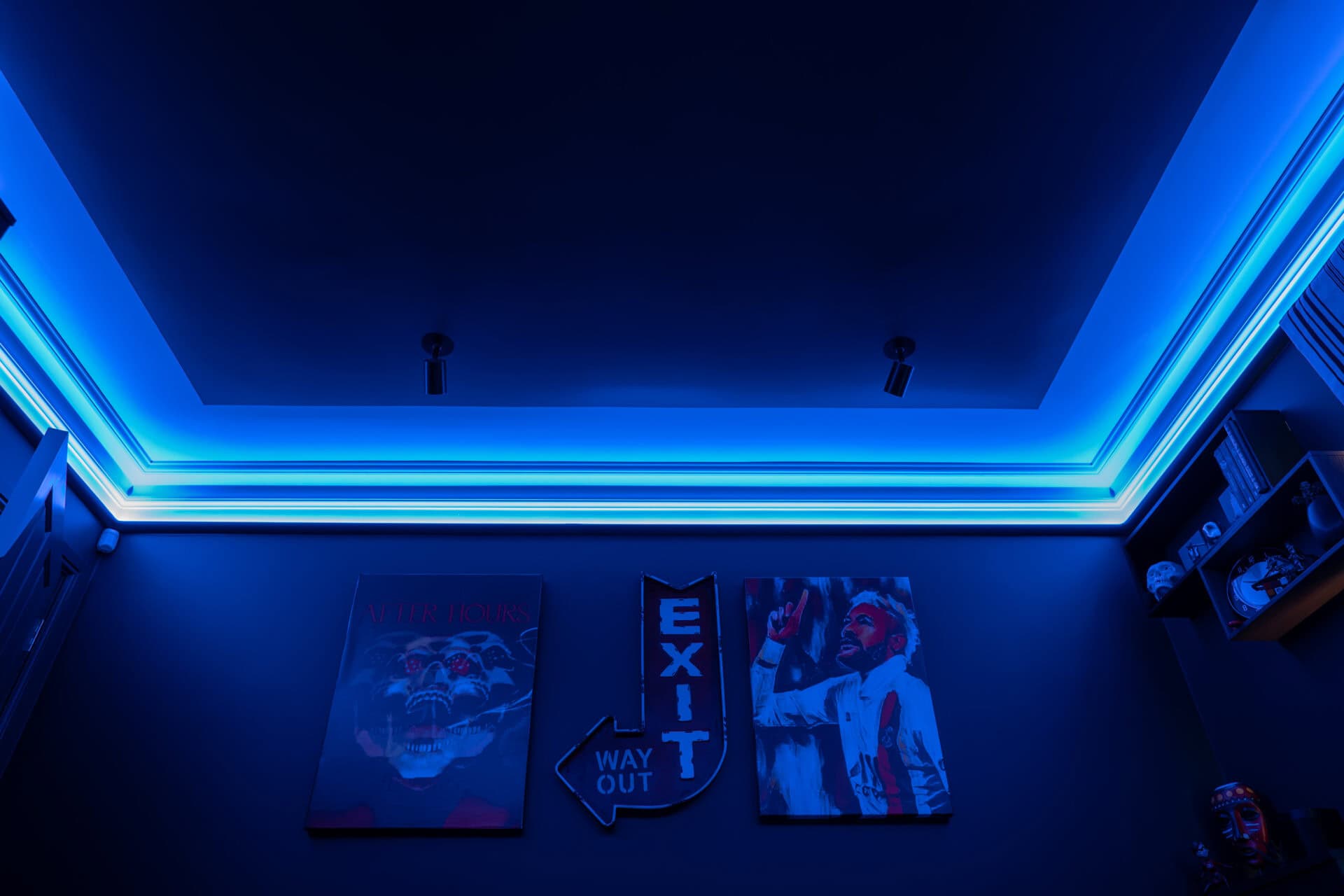
- Concealed LED light strip that shines up onto the ceiling, called a halo if it goes all the way round a room – a great architectural feature
- Wall Lights that conceal the light bulb – you can look at them and appreciate their beauty without hurting your eyes
- Shadow gaps within walls or ceilings, give something more architectural to the space
- Concealed LED light strip behind a media unit to show a soft glow all around, perfect for TV viewing where the light is not reflected in the TV screen
- A mirror perfectly placed to pick up the reflected illumination from another light source. An example of this would be a wall light placed on a full-width mirror, would give you illumination from the wall light but also from the reflection too! Beautiful!
- Wall-washing makes textures stand out and adds dimension.

It is important to note, that light, where you can see the source of where it is coming from (direct lighting), ie a downlight, will always appear brighter than an indirect light like an LED strip of light that is placed under kitchen wall cabinets where all you see is the glow, so bear this in mind when considering the strength of the illumination. The more control you have over the intensity and warmth, the more refined your result will be.
Temperature, Colour and Direction are Everything in Lighting Design
Lighting isn’t just about placement, it’s also about the quality of the light it gives off.
The colour temperature of light affects how a room looks and feels. Designers generally favour warm white lighting (2700–3000K) in living spaces, bedrooms, and dining areas to create comfort and softness. Cooler white light (4000K or more) may be used sparingly in utility spaces, but overuse can leave a home feeling clinical and should be seriously limited. The rule of thumb here, though, is do not mix colour temperatures in the same space. For example, if your kitchen pendants are 2700K and you go for a cool white (3100k – 4500k) LED strip under your kitchen cabinets, it is going to jar and look off. Keep it unified.
Not quite colour temperature but colour rendering is also worth a mention here. A lamp or bulb’s CRI (colour rendering indexing) is its ability to mimic natural daylight. It ensures the light shows colours as they truly are, which is essential for art, textiles, and even your own reflection in the mirror. If your bulb distorts colour, you distort the space.
Let’s not forget the colour changing lights (RGB) that you can get with LED light strips, that can highlight a feature or create a dramatic mood.
Direction also plays a major role and refers to the way that light is cast in a room – where it comes from, where it is aimed and how it interacts with the surfaces it hits. As we have already discussed, light that bounces off walls or ceilings is so much softer and more flattering than direct glare, but a targeted downlight might be just about the only thing that will do the job. When lighting up a piece of art, for example. However, even with this there are other decisions to make. If the artwork is sculpture you may decide to direct the spotlight to the rear of the object that shows off it’s silhouette, or shining it in front will show off the detail. It all depends what is required.
Backlighting is another way to add illumination without the glare. This could be behind a translucent material such as Corian or Alabaster – luxurious and refined.
Mirror lighting – You will often see backlighting in mirrors. This is so you are lighting the subject in front of the mirror, which is you. If you are well-lit, then this will show in the mirror. If you did not want a backlit mirror, then you could also use wall lights or pendants either side of the mirror. You do see this, but never do it! – a downlight above the mirror or even, heaven forbid a picture light! Light the subject, not the mirror.
Uplighting is another useful way to light a room without glare. Light is thrown up towards the ceiling, perhaps from floor lamps, LED ceiling strip or wall washing. This can open up a low ceiling and create drama.
Directional lighting when done right makes rooms feel more layered and luxurious, shadows are softened, not stark and key details are highlighted without overwhelming the eye.
Plan Lighting Design Early – Not at the End
Lighting design should be integrated from the start of a renovation or build. If you wait until the electrics are going in, you’re already too late. You’ll find yourself compromising, cutting corners, and making reactive choices instead of creative ones. Proper lighting design should evolve alongside the space, informing joinery, finishes, and furniture layouts.
Much better to be organised or you risk your newly plastered ceiling being punctured with new holes, to accommodate the wiring. When lighting is planned too late, you lose the opportunity to build in beautiful solutions, and often settle for a basic grid of ceiling lights that do little to elevate the space.
Final Thoughts: Light the Mood, Not Just the Room
Great lighting design is not about how bright a room is. It’s about how it feels.
When you layer light thoughtfully, consider the emotional tone of each space, and use temperature and direction with purpose, you create an environment that’s not just functional, but seamless, balanced and alive.
Lighting deserves the same attention as flooring, paint, or layout. When it’s done well, it’s beautiful. But when it’s wrong, it’s impossible to ignore.
For further reading go here and read the rather excellent “The Languages of Light: A Creative Approach to Residential Lighting,” by Lighting Designer, Rebecca Weir and Allyson Coates.
If you require help with your lighting and want to discuss with me, then go here to book a free clarity call.