

House renovation costs UK are often presented as averages, price per square metre, ballpark kitchen budgets or suggested allowances for bathrooms.
For anyone planning a renovation home at a higher level, these figures are largely academic. They describe components, not outcomes. They give numbers, though they do not explain why some homes feel calm, resolved and effortless to live in, while others, despite similar budgets, never quite settle.
The real inquiry isn’t merely about the “cost” of a renovation. It is about the value of the resolution. It is the difference between a house that has simply been updated and one that feels seamless, where every sightline, material transition and junction has been considered. Others, even with significant investment, feel slightly unresolved.
In my experience, this distinction is rarely dictated by the final spend. It is determined much earlier, in the decisions that shape the structure of the home, how space is used and how rigorously those ideas have been tested before anything is committed.
A full home refurbishment does not become expensive because of finishes alone. It becomes expensive when decisions are made without fully understanding their consequences.
Where the Budget Goes in a Full Home Refurbishment
In a premium refurbishment, a significant proportion of the budget is committed long before anything visually interesting is introduced.
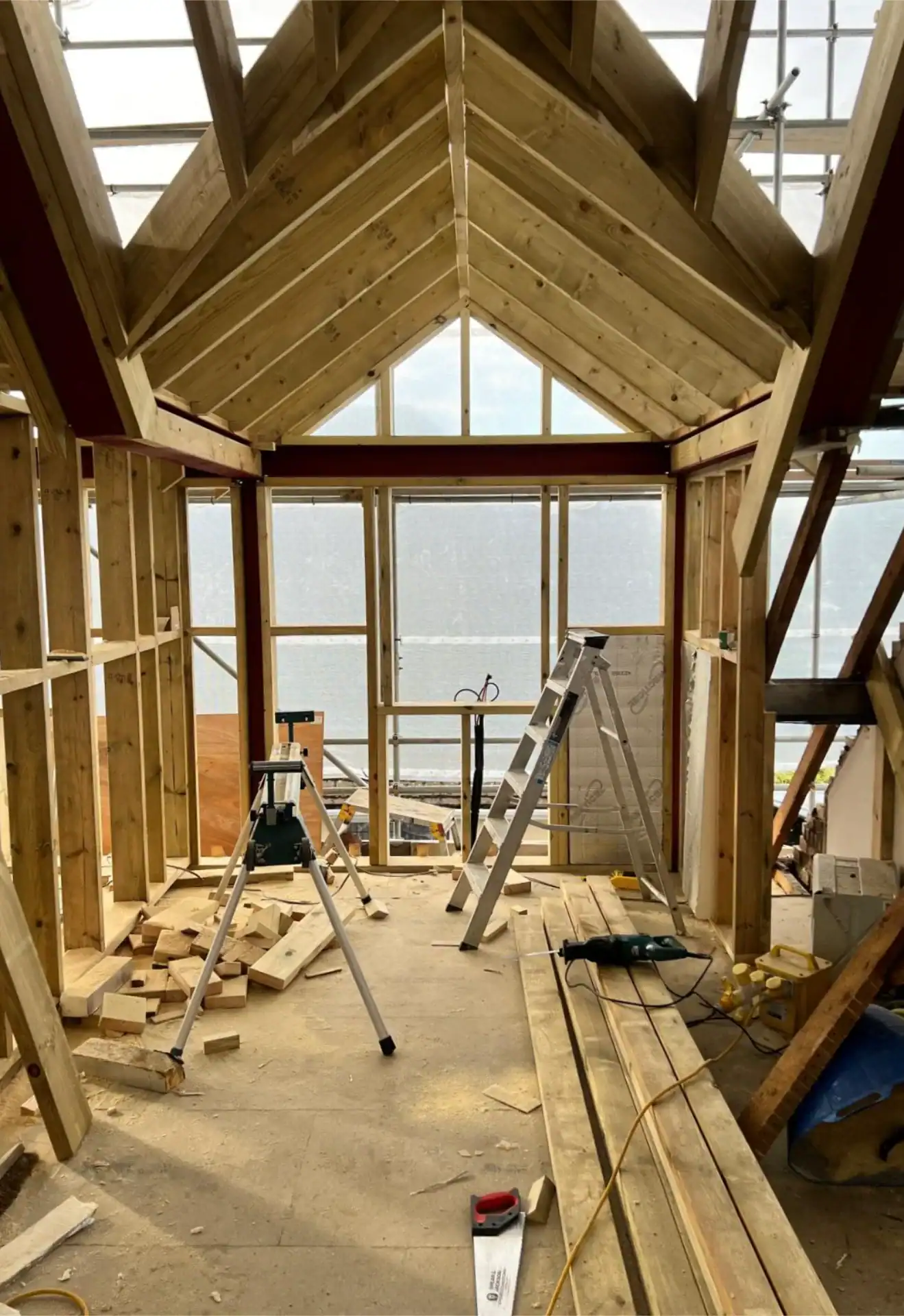
Structural work sits at the centre of this. Removing walls, introducing steel, adjusting levels or reworking staircases defines what the home can become. These decisions shape every space that follows.
When they are well designed, everything works as it should without you having to think about it. When they are not, you notice it quickly, rooms that never feel quite warm enough, lighting that doesn’t suit how the space is used, or layouts that don’t support how you move through the house.
By the time these elements are resolved, much of the renovation of house cost has already been committed. Structural decisions, layout changes and service positions have shaped both the budget and what is now possible. What follows is often treated as the “design stage”, though in reality it is working within a framework that has already been largely set.
The Layer That Makes a Renovation Home Work
The most valuable layer in a renovation home is rarely the one people focus on first.
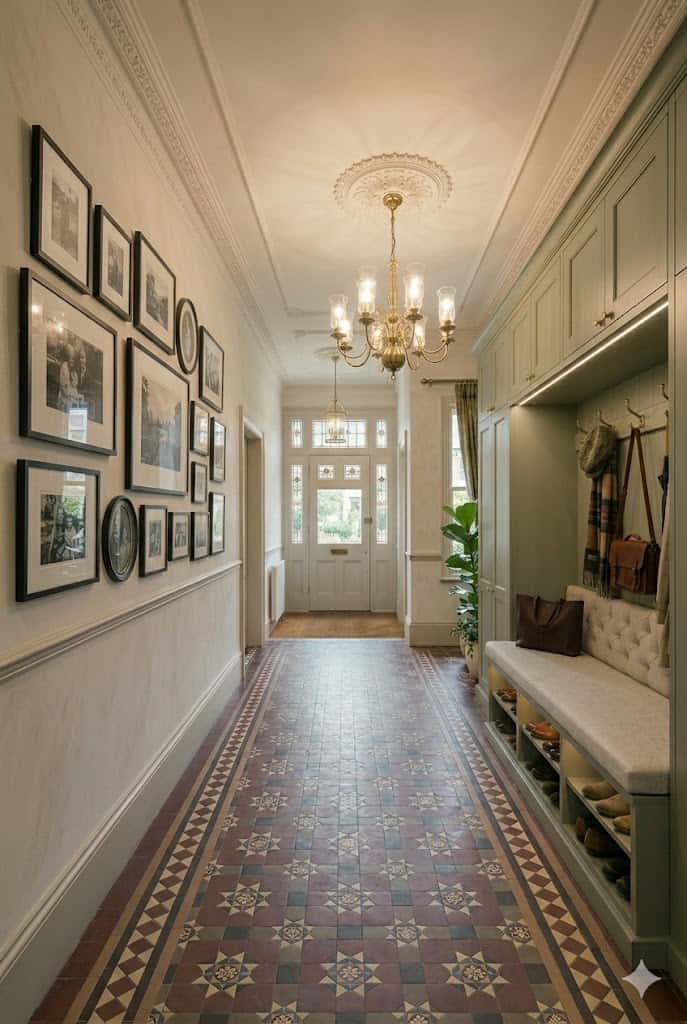
Bespoke joinery, built-in storage, the rhythm of openings and the way spaces connect, these are the elements that define a home’s longevity. A properly considered kitchen layout or storage that has been planned into the structural fabric will continue to add value long after decorative trends have shifted.
This is where interior design operates at its most meaningful level. Not as decoration applied at the end, but as a discipline that shapes how a home functions and how it feels to live in. When this layer is resolved properly, the result is subtle. Movement feels natural. Storage sits where it is needed. Rooms support daily life without needing to be constantly adjusted. When it is not, the opposite happens. Storage is never quite enough. Circulation feels slightly awkward. Spaces look good in isolation but do not fully support how they are used.
This is not about interior style. It is about whether the home has been properly thought through.
Material, Atmosphere and the Feel of a Home
Material selection is often where people expect to see the budget reflected most clearly. It matters, though not in isolation.
The weight of a door, the way light moves across a surface, the texture underfoot. These are the elements that shape how a home feels on a daily basis. Interior design at this level is not simply about selecting beautiful materials. It is about how those materials work together to create a consistent atmosphere across the home.
A well-resolved refurbishment does not rely on individual statements. It holds together as a whole. One space leads naturally into the next. There is continuity in tone, texture and light.
High-end materials placed into a poorly resolved layout tend to highlight imbalance rather than correct it.
When Good Ideas Are Not Tested Properly
Most renovation decisions begin with good intentions. The difficulty arises when a single idea is considered in isolation, without stepping back to understand how it interacts with the rest of the house.
In a recent conversation with a new client, the idea of a fully glazed front elevation came up. It can feel like a strong architectural move, bringing light and openness. It also introduces questions around privacy, solar gain, glare, furniture placement and how that space is actually lived in throughout the day.
In another instance, a client wanted a refined living room space to entertain, yet the only access to the ground floor WC required guests to pass through the kitchen and utility. The plan appeared resolved, though it failed the reality of how the home would be used.
Open-plan living presents a similar pattern. A large, continuous space often feels like the obvious solution. However, in a busy family home, it raises questions around noise, separation and the need for retreat. Without understanding how daily life unfolds, scale alone does not deliver comfort.
These situations are not unusual. They come from focusing on a single idea rather than understanding how the home works as a whole and how you will live in it.
The Cost of Correction in a Refurbishment
The point at which a renovation becomes unnecessarily expensive is rarely where people expect. It is not typically when a higher-quality material is selected or a bespoke element is introduced. Costs escalate when earlier decisions have to be revisited and corrected.
A layout that requires adjustment after structural work has been priced. Lighting that does not align with how a room is used. Storage that has not been properly accounted for and begins to affect how spaces function.
At that stage, the work is no longer about refining the design. It is about correcting it, often under pressure and at a higher cost. Budgets do not drift because people choose better things, but through the need to resolve friction that should have been addressed at the start.
What You Are Really Investing In
A whole-home renovation is not simply a financial exercise. The real investment sits in how well the home supports your life once the refurbishment is complete.
A well-resolved home allows daily routines to run smoothly. It provides spaces to gather, to retreat and to function without compromise. It feels calm where it should and dynamic where it needs to be.
This is where interior design adds real value. Not just in how a home looks, but in how it feels to live in, day after day. That experience has value. It is the difference between a home that works for you and one that you are constantly working around.
Why Clarity Changes Everything
By the time drawings are finalised, many of the most important decisions have already been made, whether consciously or not. If those decisions have not been properly worked through, the project becomes reactive. Layouts are adjusted to fix issues that were never fully resolved. Budgets are stretched trying to hold onto ideas that were never prioritised. Compromises are made without a clear understanding of what should be protected.
Clarity changes this entirely.
It means understanding how the home needs to function in detail. It means defining priorities properly, not everything sitting at the same level. It means establishing a clear hierarchy of what matters most, what supports it and what can flex if needed. When that hierarchy is in place, decisions under pressure become straightforward. The integrity of the design is protected because it is clear what cannot be compromised.
The Cornerstone™ process is built around establishing this level of clarity before anything is fixed. It defines priorities, tests ideas properly and creates a framework for decision-making that holds as the project moves forward. Read more about it here.

Final Thoughts
A whole-home renovation is not defined solely by what is spent, but by how well those decisions have been resolved.
In premium homes, the difference is felt in how the space works every day. When decisions are properly considered, the home feels balanced, intuitive and complete. When they are not, even significant investment can leave a sense that something is not quite right.
If you are planning a renovation home or a full refurbishment, ensuring those early decisions are properly tested will have a far greater impact than any individual feature or finish.