

You know that feeling when you walk into a beautifully designed hotel suite? The hush. The calm. The softness of the lighting, the weight of the curtains, the quiet confidence of the furniture. It’s not just luxury – it’s design thinking at its most refined. Those same principles that elevate a five-star hotel can absolutely transform how your home feels, too. And no, you don’t need an infinity pool or a concierge. You just need to pay attention to the details the way a great hotel designer does.
I’ve pulled together some of the most effective hotel design secrets I’ve seen, from Mayfair to the Med, that can work brilliantly in residential interiors. These are real-world, high-impact styling decisions that add a sense of polish and quiet luxury to the way you live at home.
Light Like a Designer, Not an Electrician
Yes, I know I keep banging the same gong when it comes to lighting, but this element is absolutely key if you want a luxurious feel at home. High-end hotels are masters of atmospheric lighting. There’s never just one overhead bulb blasting down, obviously, but there are layers: wall sconces that skim the surface of a room, table lamps for glow, directional spotlights to accentuate art or textures. Everything is tuned to create mood and intimacy.
Steal the idea:
Ditch the ceiling-only light plan. Use plug-in wall lights (try Pooky or Soho Home), floor lamps with warm bulbs (2700K is the sweet spot), and table lamps in multiples. Don’t forget dimmers, they’re your secret weapon. In fact if you want to go more in depth on lighting ideas you will need to read my other blog: Lighting Design 101: How Designers Layer Light (and what Electricians Miss).
Use Texture Like It’s a Paint Colour
Texture is the unsung hero of hotel design. Think velvet, linen, polished wood, boucle, sisal, brass. These materials catch the light differently and make even a neutral room feel layered and luxurious. Combine raw oak floors, velvet headboards, soft wool throws, and antique brass light fittings. You don’t even notice necessarily the colour palette because the textures are doing all the talking.
Steal the idea:
At home, mix crisp cotton sheets with a linen throw. Add an old leather chair, a jute rug, or velvet cushions. Use materials that invite touch and create contrast – smooth against rough, warm against cool. If I specify a plain set of curtains, I like to elevate them with a gorgeous ruffled trim, for example. Something to catch the eye and create drama and interest.
Invest in Statement Pieces (and Don’t Overfill)
In the best hotel rooms, every item has presence. A sculptural chair. A bold headboard. One large artwork, rather than a scatter of small prints. This is about confident restraint. Many luxury hotels now add one-off antique or vintage pieces to balance out the new – whether it’s a reclaimed sideboard, a vintage rug, or 1970s glassware in the mini-bar area.
Why? Because everything new can feel soulless. Vintage brings history, character and visual interest.
At The Ned in London, masters of 1920’s interiors, marble fireplaces might be paired with walnut wall-panelling, canopied four posters or oversized contemporary artwork – nothing matchy, but always intentional.
Steal the idea:
Edit your space. Have fewer, but better things. A vintage G Plan sideboard can ground a room; a bold light fixture (try Bert Frank or Holloways of Ludlow) can do more than five small accessories ever could. For more information on how to layer vintage see my other blog: Design with Depth: How Vintage Brings Timeless Soul to Modern Spaces.
Tell A Story in your Bedroom
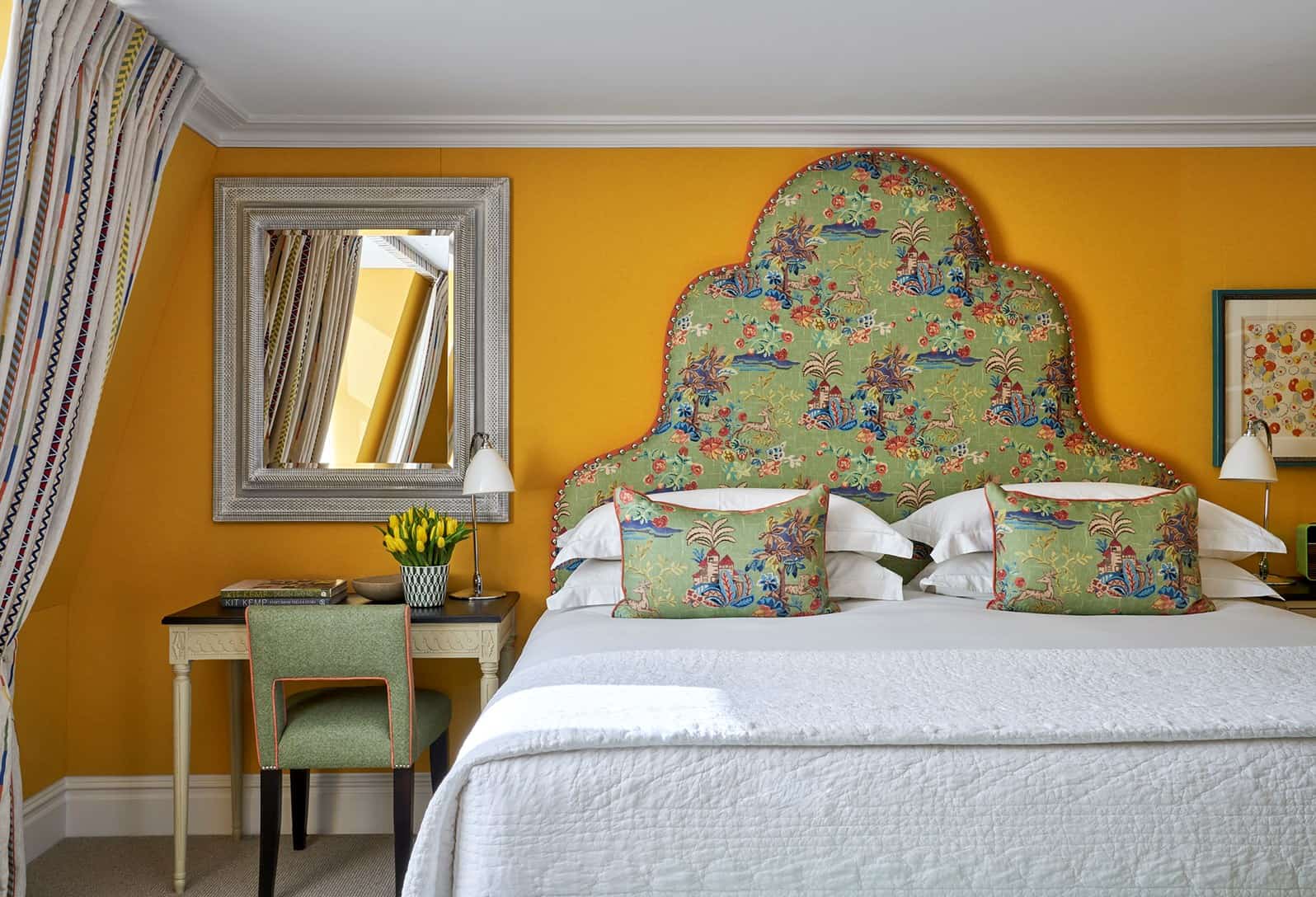
Kit Kemp, the design force behind Firmdale Hotels, Charlotte Street being her first hotel, is a master of storytelling through interiors and a must for gleaning those highly prized hotel design secrets. Nowhere is that more evident than in her hotel bedrooms. These aren’t just rooms; they’re characters that are lively and playful and human-centric. Each space is layered with pattern, colour, and art that feels collected over time. A whimsical fabric might nod to British folklore; a hand-painted cabinet tells its own tale. A collection of basketry, may nod to authentic craftsmanship. She has a love for unexpected details and really anything goes!
Steal the idea:
Your bedroom doesn’t have to be minimalist to be restful. Tell your own story through pieces that mean something – invest in an upholstered headboard in a fabric you fell in love with, art from a favourite trip, a lamp with a family backstory. Narrative adds intimacy, and that’s what turns a bedroom, into a true sanctuary.
The Power of a Signature Scent
Ever noticed how luxury hotels smell as good as they look? It’s not an accident. Scent is one of the fastest ways to trigger emotion and memory, and it hits you as soon as you walk in. From the rose and oud scent at The Connaught to the fig leaf and amber of the Soho House signature, scent helps brand the space and wrap you in atmosphere.
It has a way of transporting you away from the mundane and adding a memory of something soothing and calming. On a hunt for those luxury hotel design secrets, I have often been to luxury hotels were I cannot rest until I find the source of the beautiful scent, such is the pull that it has over me.
Steal the idea:
Choose a signature scent for your home and use it consistently – a candle, diffuser, or room spray. Brands like Laboratory Perfumes, Earl of East, or Jo Loves do excellent British-sourced options.
Style with Purpose, Not Perfection
Finally, high-end hotel interiors are never fussy or plain. They’re confident. Balanced. Curated, but not overdone.
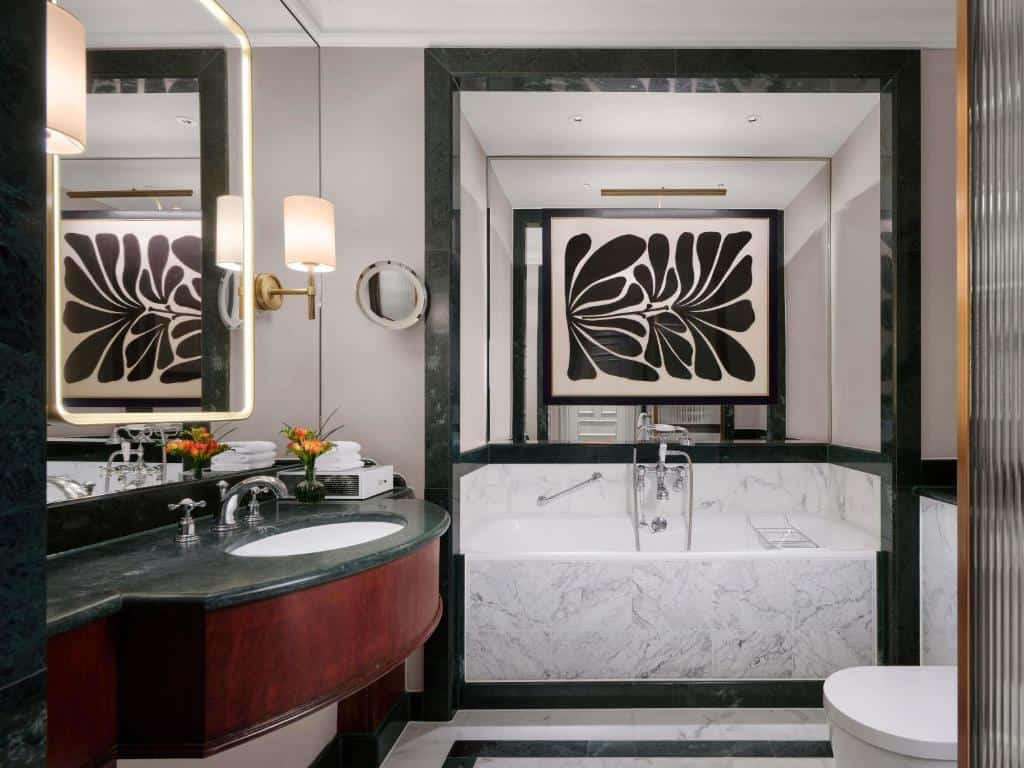
Too many homeowners who have designs on creating a luxury home, fall flat at this point. A home is not supposed to be straight out of Pinterest, with everything in place and perfect, overworked and sterile. The most inviting hotel rooms don’t feel like showrooms – they feel like someone lives there, even if only for a night. That’s part of their magic. That’s the key to luxury at home: design with intention, not just because you have seen something similar somewhere.
Create moments that feel styled but still livable. It’s that relaxed, considered styling, what some call “perfectly imperfect”, that creates soul. In the words of hotel designer Ilse Crawford of London’s Babington House, “Design is not just about visual beauty. It’s about how a space makes you feel.”
Steal the idea:
Don’t obsess over everything matching or being ‘finished’. Let your space evolve. Style your shelves with objects that have meaning – not just what filled the shopping basket last weekend. Group things by tone, material, or memory. Layer books, vintage finds, a candle you actually light. Don’t clear every surface. Let there be personality, rhythm, and quiet moments of discovery. Well-placed books in a reading nook, by a wonderfully comfortable armchair. A vase with seasonal branches. A lamp that creates a pool of warmth in the evening.
Final Thought: Your Home Is Your Private Hotel
We often think of luxury as something we check into. But why not design your home as though it deserves that same care and consideration? Your bedroom can feel like a retreat. Your lounge can feel like a boutique suite. Your kitchen, a stylish café.
It’s not about copying – it’s about translating the principles of high-end hotel design into something that works for your life.
Your home is the most personal space you’ll ever step into. Why not make it feel like a destination?