

Most homeowners think of a safe scheme as the sensible one. Neutral walls, a layout copied from the last three houses on the street, finishes chosen because they won’t offend anyone. It feels like the responsible choice, the one that protects the investment.
In my experience, it’s usually the opposite. Bold interior design, chosen with intention rather than impulse, tends to hold up far better over time than the safe option ever does. Playing it safe doesn’t remove risk from a renovation. It just moves the cost further down the line, where it shows up as a kitchen you’re already tired of, a layout that never quite worked, or a home that looks finished but doesn’t feel like yours.
Playing it safe doesn’t remove risk from a renovation. It just moves the cost further down the line.
The real cost of playing it safe
Safe choices are rarely as neutral as they seem. They’re usually a decision made to avoid a decision, and that avoidance has a price.
A finish chosen because it’s inoffensive rather than right tends to date faster than a considered one, simply because there was never a strong idea behind it to begin with. A layout copied from a show home or a neighbour’s renovation, rather than built around how your household actually moves through a day, often gets worked around for years rather than genuinely loved. A colour palette chosen purely with resale in mind can leave a home that photographs well but that nobody, including the people living in it, ever really falls for.
The hidden cost is this: you can spend a full renovation budget and still end up with a house that doesn’t feel like anything in particular. That’s not a safe outcome. It’s an expensive, unresolved one.
Proof, not just opinion
I’ve seen this play out directly in projects I’ve worked on, and the pattern holds. The braver decision, made properly, tends to be the one that ages well.
In one open-plan kitchen renovation, the obvious safe choice would have been a simple tiled splashback. Instead, we used a bespoke Venetian plaster splashback as a deliberate focal point, paired with natural, warm materials and a considered lighting scheme. It’s the kind of decision that could have felt risky on paper. In the finished space, it’s the thing that makes the room.
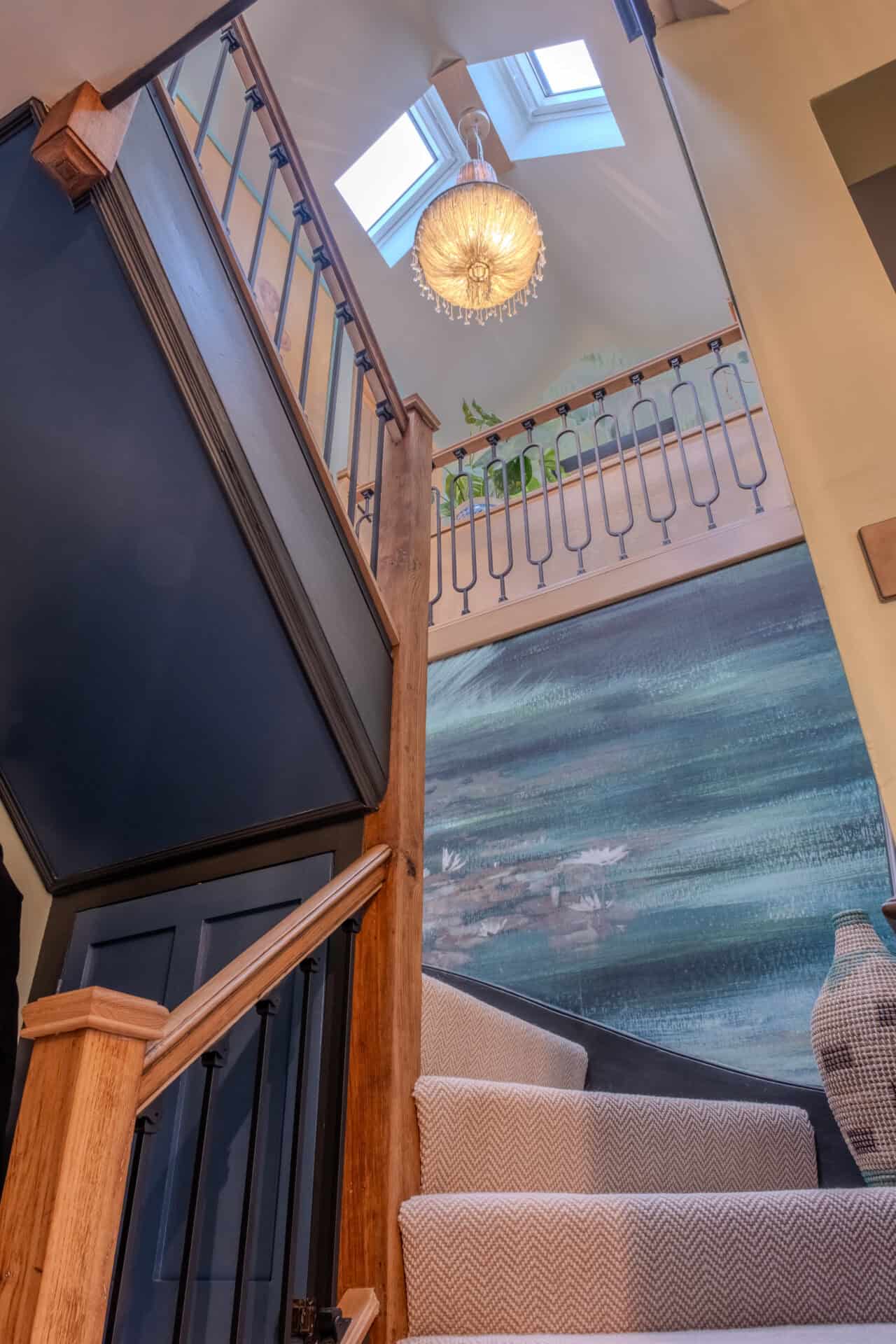
A hallway, stairs and landing project tells a similar story. Most homeowners treat this as a transition space and design it as an afterthought. Here, the brief was the opposite: bring in height, drama and a genuine sense of arrival, rather than settling for a corridor that people simply pass through. The result is a space that sets the tone for the whole home, rather than one that’s simply been tolerated.
In a lounge built around a media wall, the safe route would have been a neutral palette that wouldn’t date. Instead, we built the scheme around a specific, confident colour story, warm blues, soft greens and a blush that nodded to sunset light, layered with a slatted wooden ceiling for warmth and texture. It’s a far more particular, personal room than a safe scheme would ever have produced, and it’s exactly why the family uses it.
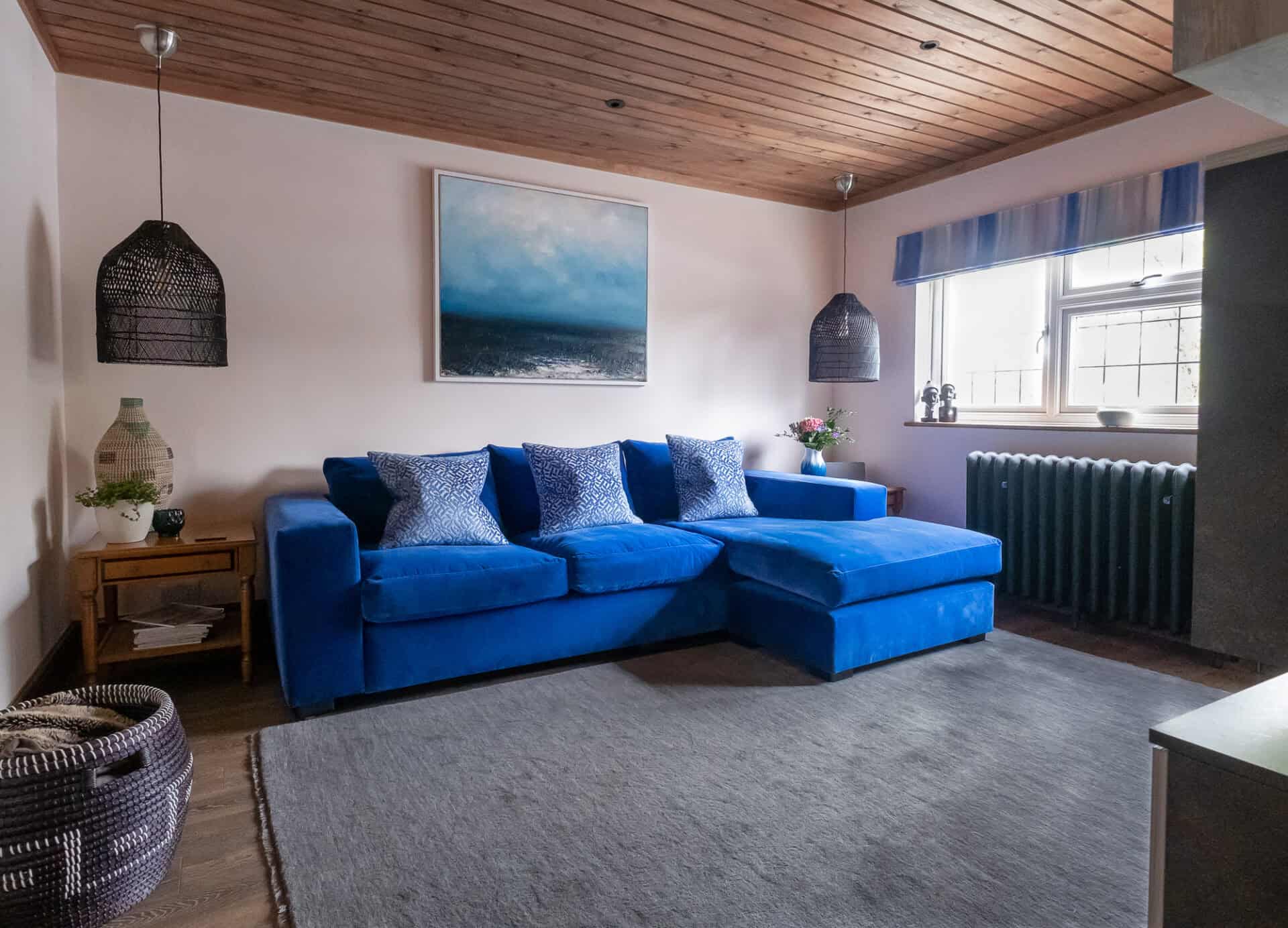
None of these were bold for the sake of being bold. Each one was a considered decision, backed by a clear brief.
A bold interior design choice isn’t a gamble if it’s made with clarity about how you actually want to live.
Brave is strategic, not reckless
This is the distinction that matters most. A bold interior design choice isn’t a gamble if it’s made with clarity about how you actually want to live. It only becomes a gamble when it’s made without one.
This is exactly why every project I take on starts with The Cornerstone™, a clarity workshop that happens before an architect is even appointed. It’s where we work out how a home genuinely needs to function, flow and feel, so that every decision that follows, however bold, is rooted in something real rather than trend or guesswork. A confident choice made from a clear brief isn’t a risk. It’s simply the right decision, made early enough to be the obvious one.
Practical principles for being brave with a plan
You don’t need to be bold in every room to get the benefit of this approach. A few principles make it far more manageable.
Pick one non-negotiable statement per room, rather than trying to make every surface make a point. A single considered choice, be it a splashback, a lighting moment or a piece of joinery, tends to carry a whole space far better than five competing ones.
Brief for how a room will feel in five years, not how it will photograph on the day it’s finished. The renovations that age well are the ones designed around daily life, not around a single set of listing photos.
Where you do use neutral, treat it as a background decision rather than the whole decision. A neutral palette still needs texture and pattern to do its job properly. Flat neutral isn’t calm, it’s just unfinished.
Flat neutral isn’t calm, it’s just unfinished.
If you’re planning a renovation and want to make bolder decisions with confidence rather than guesswork, the best next step is a free Clarity Call. It’s a 30-minute conversation about your project, where it stands, and what a considered, brave design plan could look like for your home.
Where has bold paid off for you, and where did playing it safe let you down?
I’d love to know both sides of this. Perhaps there’s a choice you were brave with that turned out to be the best decision in the whole renovation, or one you played safe on and have regretted ever since. Either way, these are the moments that shape how a home actually feels to live in. Tell me yours.